
Boca Raton : 561.488.2200
Delray Beach: 561.637.4200

Minimally Invasive Achilles Tendon Repair, Haglund's Deformity, and Plantar Fasciitis Specialist
Advanced Treatment for Achilles Tendon Ruptures, Chronic Tendinosis, Heel Spurs, Haglund's Deformity, and Revision Achilles Surgery
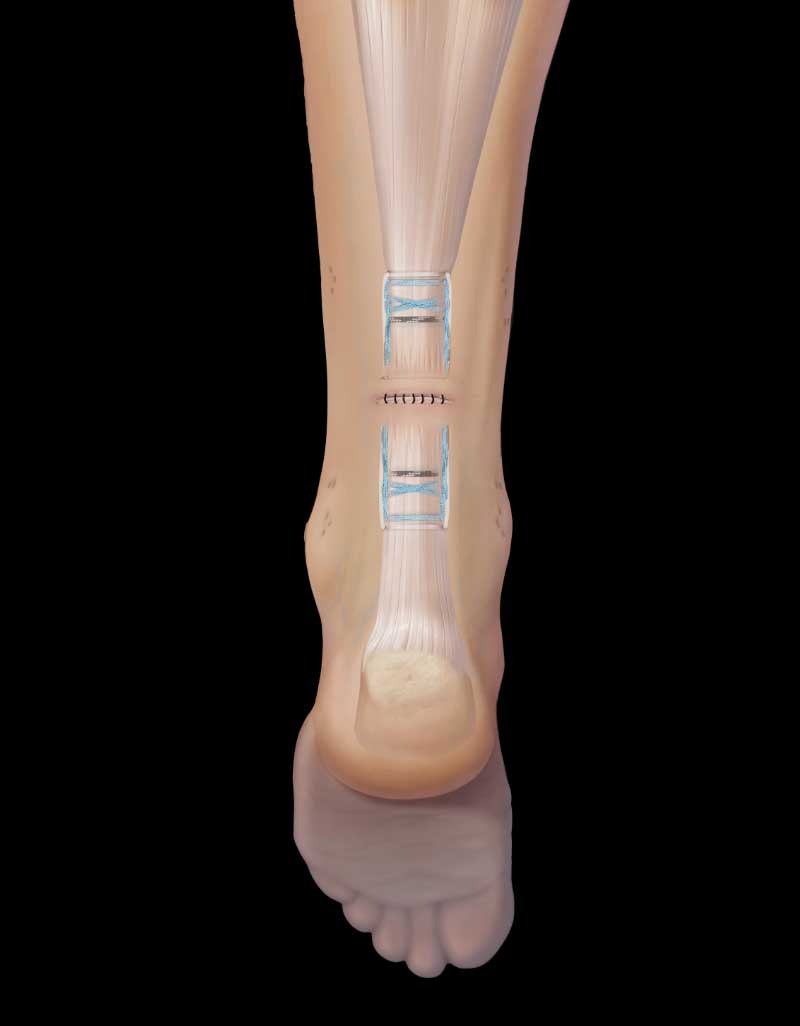 The Achilles tendon is the strongest tendon in the body, yet it is one of the most commonly injured structures in active adults. Whether you are suffering from a sudden Achilles rupture, chronic tendon degeneration, heel pain, or complications from previous surgery, specialized treatment can help restore strength, mobility, and function.
Dr. John Goodner specializes in minimally invasive Achilles tendon surgery, Achilles tendon reconstruction, Haglund's deformity correction, heel spur surgery, sports medicine, and complex revision foot and ankle reconstruction.
Understanding the Achilles Tendon
The Achilles tendon connects the calf muscles to the heel bone and plays a critical role in walking, running, jumping, and athletic performance. Injuries may develop suddenly from trauma or gradually from chronic overuse and degeneration.
Common conditions include:
- Achilles tendon rupture
- Achilles tendinitis
- Achilles tendinosis
- Insertional Achilles tendinopathy
- Haglund's deformity
- Retrocalcaneal bursitis
- Calcaneal spurs
- Partial Achilles tears
- Chronic Achilles degeneration
- Failed previous Achilles surgery
Advanced Plantar Fasciitis & Chronic Heel Pain Treatment
What Is Plantar Fasciitis?
Plantar fasciitis is one of the most common causes of heel pain, affecting active individuals, runners, athletes, workers who spend long hours standing, and patients with foot biomechanical abnormalities.
The plantar fascia is a thick band of connective tissue that supports the arch of the foot. Repetitive stress can lead to inflammation, microtearing, degeneration, and chronic heel pain.
Common symptoms include:
- Pain at the bottom of the heel
- Pain with the first steps in the morning
- Increased discomfort after activity
- Arch pain
- Tenderness along the plantar fascia
- Chronic heel pain that limits exercise and daily activities
Conservative Treatment Options
Most patients improve with non-surgical treatment. Conservative therapies may include:
- Stretching programs
- Physical therapy
- Night splints
- Custom orthotics
- Supportive footwear
- Activity modification
- Anti-inflammatory medications
- Immobilization when necessary
- Ultrasound-guided treatment
For patients who continue to experience symptoms after several months of treatment, advanced minimally invasive options may be considered.
Regenerative Medicine for Plantar Fasciitis
Chronic plantar fasciitis is often associated with degenerative changes rather than active inflammation. Regenerative treatment options may help stimulate the body's natural healing response and may include:
- Platelet-rich plasma (PRP)
- Concentrated growth factor therapies
- Ultrasound-guided regenerative injections
- Advanced biologic treatment protocols
These treatments may be particularly beneficial for chronic plantar fasciosis that has failed traditional conservative care.
Endoscopic Plantar Fasciotomy
Endoscopic plantar fascia release is a minimally invasive procedure performed through small incisions using specialized visualization equipment.
Benefits may include:
- Smaller incisions
- Less postoperative pain
- Reduced scarring
- Earlier return to activity
- Faster recovery compared to traditional open surgery
The procedure allows targeted release of the plantar fascia while minimizing soft tissue disruption.
Nanoscopic Plantar Fascia Procedures
Advances in ultra-minimally invasive technology now allow certain heel pain conditions to be treated using needle-sized instrumentation and nanoscopic visualization techniques.
Potential applications may include:
- Plantar fascia debridement
- Scar tissue removal
- Evaluation of chronic heel pain
- Treatment of soft tissue pathology
These procedures are designed to minimize surgical trauma while promoting faster recovery.
Percutaneous Plantar Fascia Release
Percutaneous plantar fascia release utilizes small incision techniques to address chronic plantar fasciitis in appropriately selected patients.
Potential benefits include:
- Minimal soft tissue disruption
- Small incisions
- Reduced postoperative discomfort
- Accelerated rehabilitation
- Outpatient treatment
Patient selection is critical to achieving optimal outcomes.
Heel Spur Surgery
Heel spurs are frequently seen on X-rays of patients with chronic plantar fasciitis, although the spur itself is not always the primary source of pain.
When clinically indicated, minimally invasive techniques may allow:
- Removal of symptomatic bone spurs
- Treatment of associated soft tissue pathology
- Faster recovery compared with traditional open procedures
Comprehensive Heel Pain Specialist
Many patients have multiple contributing causes of heel pain, including:
- Plantar fasciitis
- Plantar fasciosis
- Heel spurs
- Baxter's nerve entrapment
- Achilles tendinopathy
- Haglund's deformity
- Stress injuries
- Fat pad atrophy
A comprehensive evaluation including digital X-rays, diagnostic ultrasound, and advanced imaging when necessary helps identify the true source of pain and guide individualized treatment recommendations.
When Surgery Is Considered
Surgery is generally reserved for patients who have failed extensive conservative treatment and continue to experience significant pain and functional limitations.
The goal is to relieve pain, restore function, and return patients to work, exercise, sports, and daily activities as quickly and safely as possible.
Comprehensive Evaluation
Every patient receives a thorough evaluation that may include:
- Digital X-rays
- Diagnostic ultrasound
- MRI studies
- Gait analysis
- Review of previous surgeries
- Personalized treatment planning
Understanding the underlying cause of symptoms is essential to achieving successful outcomes.
Schedule Your Consultation
If you are experiencing Achilles pain, a tendon rupture, chronic tendinosis, heel spurs, Haglund's deformity, or complications from a previous surgery, specialized evaluation can help determine the most effective treatment plan.
Dr. John Goodner specializes in minimally invasive Achilles tendon repair, PARS Achilles reconstruction, Haglund's deformity correction, heel spur surgery, tendon reconstruction, sports medicine, and complex revision foot and ankle surgery.
Same-day and next-day appointments are available in Boca Raton and Delray Beach.